

Engaging Change: An Introduction to Motivational Interviewing in DFSV Interventions
Motivational Interviewing (MI) gives practitioners proven tools to meet discord, explore ambivalence, and build genuine motivation for change. This course applies MI’s evidence-based approach to DFSV interventions – supporting engagement, accountability, and safer outcomes for users of violence, partners, and families.
This eLearn will take an estimated 4 hours to complete.
Description
Engaging Change: An Introduction to Motivational Interviewing in DFSV Interventions
Learn how to utilise Motivational Interviewing to improve engagement and outcomes for participants of DFSV interventions.
Finding the desire, reason, or need to change is critical for engaged work. This is where Motivational Interviewing comes in.
In domestic, family, and sexualised violence (DFSV) interventions, many users of DFSV arrive “doing time” rather than actively working toward change. Some remain uncertain about whether their use of violence is truly harmful, while others struggle to take responsibility for creating safety in their families.
Motivational Interviewing (MI) is a proven counselling approach that helps people explore ambivalence, build motivation, and make positive changes. First developed in the field of substance use, it is now widely used in health, social services, and domestic, family, and sexualised violence interventions to strengthen engagement, support accountability, and promote safer relationships. MI offers practitioners practical tools to recognise ambivalence, strengthen motivation, and guide users of DFSV toward safer, more accountable choices.
By the end of this course, you will be able to:
- Explain the spirit of Motivational Interviewing (MI) and describe how its principles of partnership, acceptance, compassion, and empowerment align with values-based DFSV practice.
- Recognise ambivalence in conversations with people who use violence and understand how it can act as both a barrier and an opportunity for change.
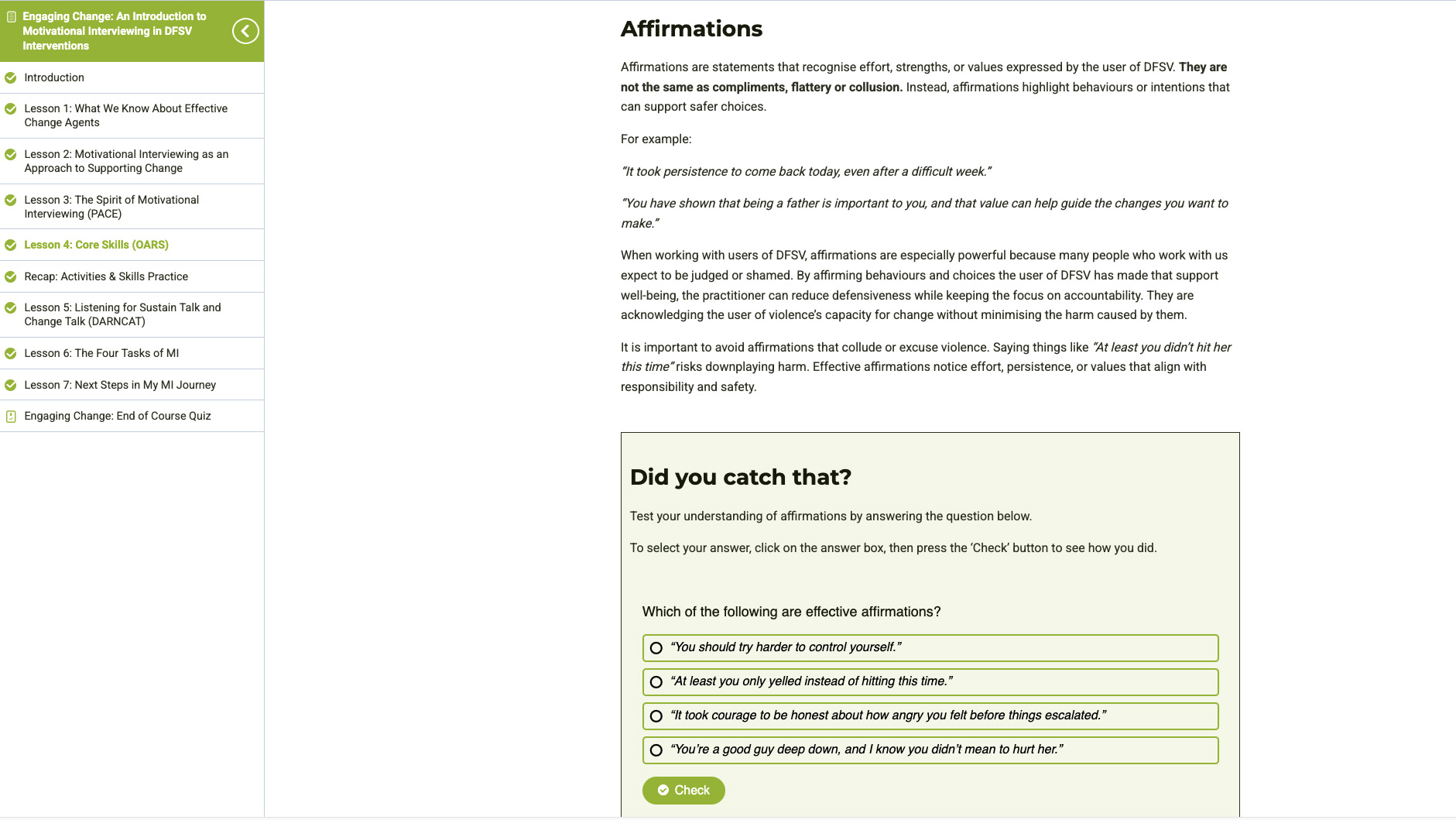
- Apply core MI skills (OARS: Open questions, Affirmations, Reflections, Summaries) to build rapport, deepen conversations, and support accountability.
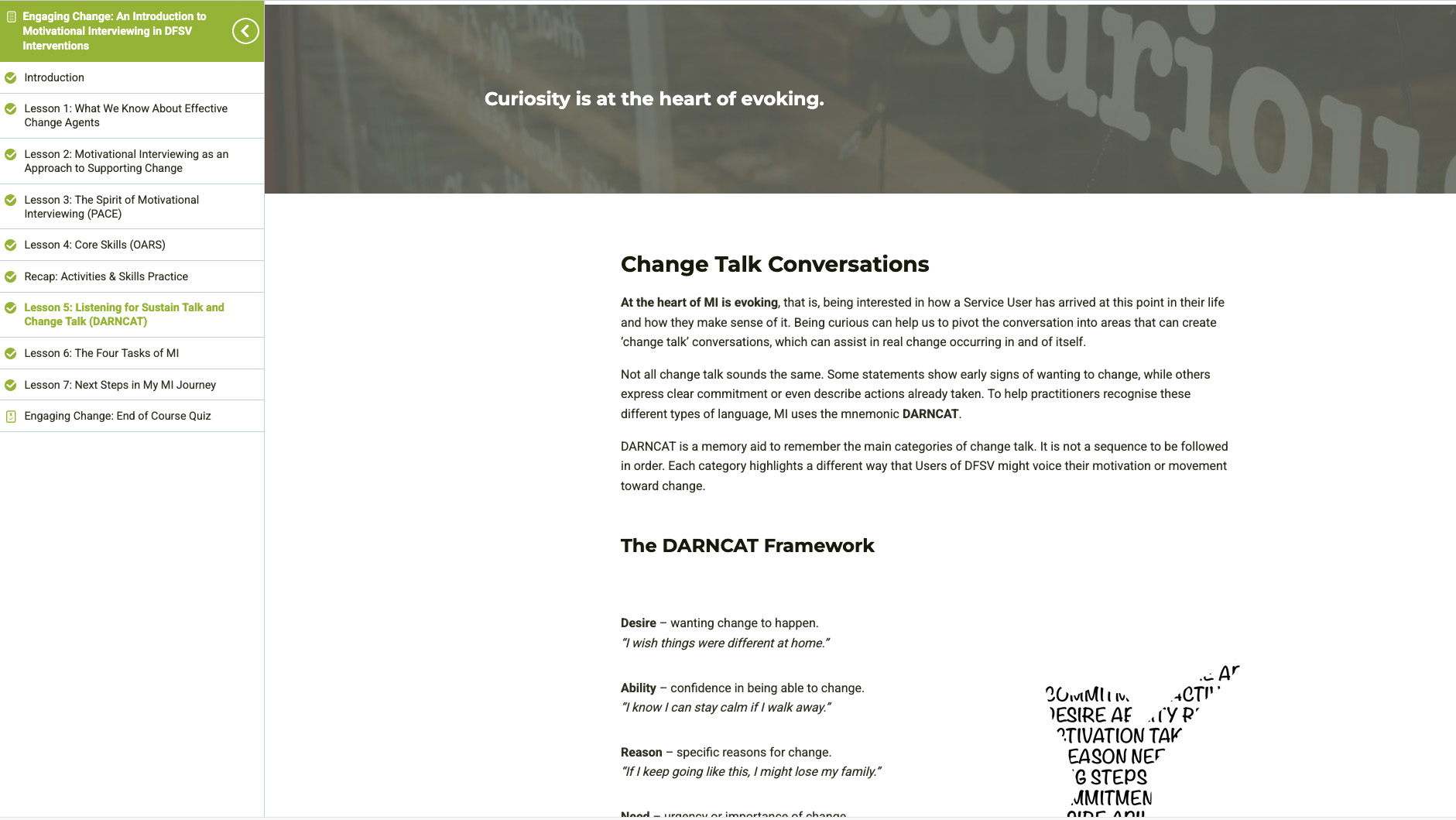
- Differentiate between sustain talk and change talk and practice strategies for responding in ways that reduce defensiveness and strengthen motivation for non-violence.
- Use the MI process tasks (Engaging, Focusing, Evoking, Planning) to structure effective intervention conversations that encourage responsibility and safer choices.
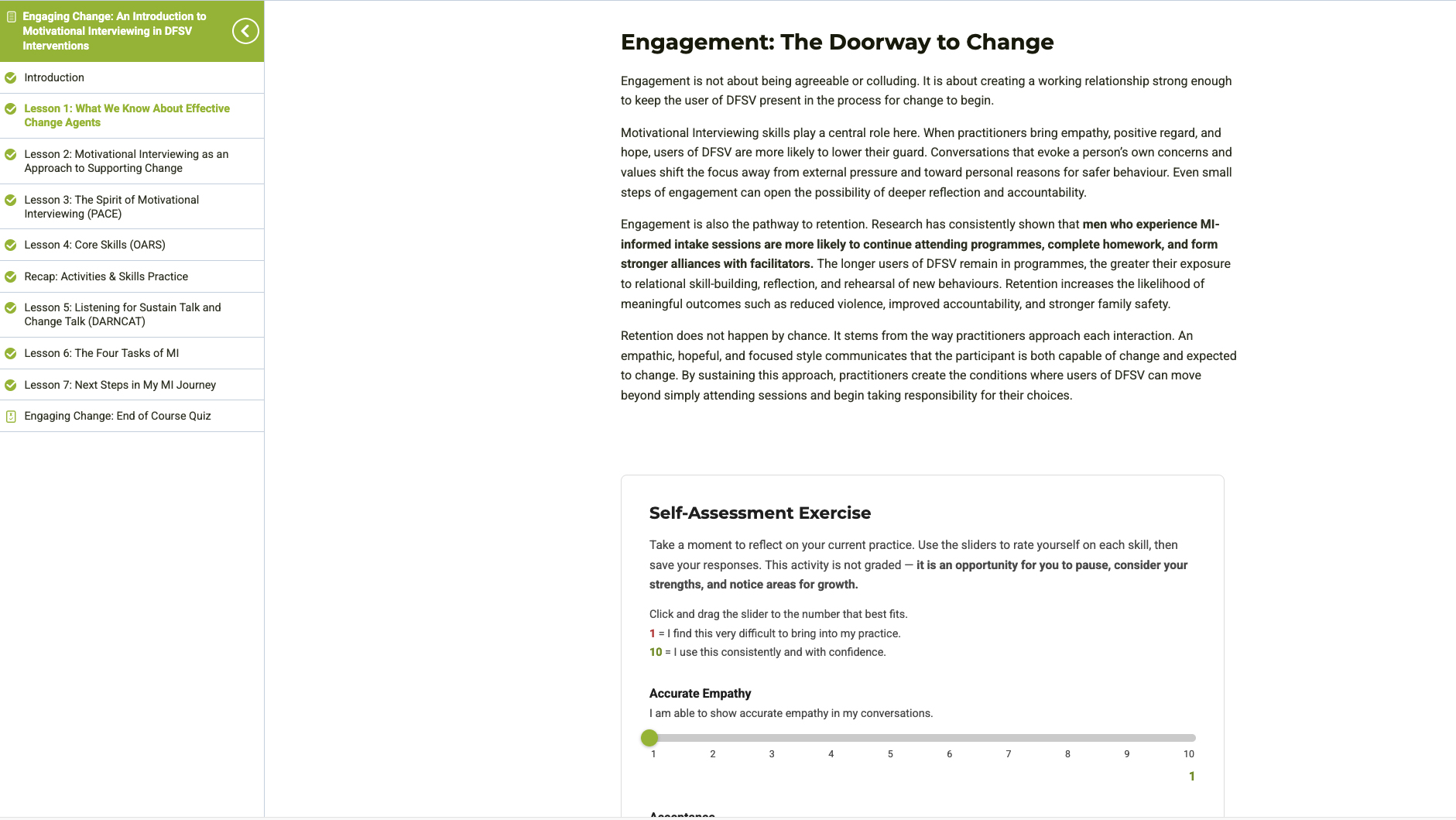
- Identify your own practice strengths and areas for growth through self-assessment and reflection activities.
- Develop a personal action plan to integrate MI skills into your day-to-day DFSV work to enhance participant engagement, programme attendance, and long-term behaviour change.
A Certificate of Completion is awarded to learners at the end of the course.
What you will need:
- A pen and paper pad. There will be an opportunity to take digital notes during the course, but we also recommend making written notes.
- Print or edit/fill in PDF files. These are optional resources available for download at the end of the course.